

Battery Monitoring 101: How to Prevent Over-Discharge, Overheating, Spills and Low Electrolyte from Damaging Your Battery Fleet

Industrial batteries are among the most valuable assets in any forklift, floor scrubber, aerial access platform, golf buggy or other battery-powered fleet. Yet many battery failures occur not because the battery has reached the end of its designed life, but because a preventable problem goes unnoticed until permanent damage has already occurred.
The challenge is simple. Batteries rarely tell operators there’s a problem in a way that’s impossible to ignore. By the time a machine stops working, battery capacity may already have been compromised, productivity lost, and replacement costs incurred.
That’s why on-battery devices are becoming an increasingly important part of modern battery maintenance programmes. Rather than relying on scheduled inspections or discovering problems after a failure, real-time battery alerts help operators identify harmful conditions as they occur, allowing corrective action before lasting damage is done.
In this article, we’ll explore four of the most common battery threats:
- Over-discharge
- Overheating
- Electrolyte spills
- Low electrolyte levels
And we’ll explain how proactive battery monitoring can help protect battery life, improve safety and reduce operating costs.
Why Battery Alerts Matter
Lead-acid and VRLA (Valve Regulated Lead Acid) batteries are critical power sources across industrial operations. However, operators are often unaware of damaging battery conditions until a catastrophic failure occurs. According to Philadelphia Scientific, irreversible battery damage is frequently caused by events such as significant over-discharge or electrolyte spills, both of which can shorten battery life and lead to premature battery replacement.
Battery monitoring devices address this problem by providing visual and audible warnings when harmful conditions develop. Instead of waiting for a battery to fail, operators receive immediate notification and can act before permanent damage occurs.
The result is a more proactive approach to battery maintenance and management, helping organisations maximise battery lifespan while maintaining productivity.
Threat #1: Over-Discharge
What is over-discharge?
Over-discharge occurs when a battery is discharged beyond its recommended operating limit. While operators may be tempted to keep equipment running until the battery is completely exhausted, deep discharges could considerably damage battery health.
VRLA batteries are particularly susceptible to permanent damage from deep discharge conditions. Once this damage occurs, battery performance can be permanently reduced, even after recharging.
Why does it happen?
Over-discharge often occurs when:
- Equipment continues operating after battery capacity becomes critically low.
- Operators are unaware of the battery’s true state of charge.
- Charging opportunities are missed.
- Battery maintenance programmes lack active monitoring.
Many fleets only discover the issue when equipment becomes stranded or loses performance unexpectedly.
How battery voltage monitoring helps
A dedicated low voltage alert continuously monitors battery voltage and warns operators when charging is urgently required. Philadelphia Scientific’s Low Voltage Alert (LVA) is specifically designed to alert users before damaging levels of discharge occur.
The system provides highly visible and audible warnings, helping ensure that batteries are returned to charge before irreversible damage can develop. Philadelphia Scientific states that the LVA uses clear visual indications and audible notifications when batteries reach critical discharge thresholds.
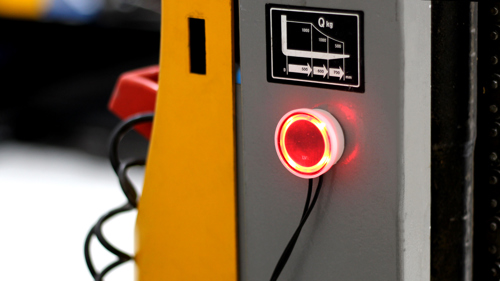
(Image above: Low Voltage Alert)
By preventing deep discharge events, organisations can:
- Protect battery capacity.
- Extend service life.
- Reduce premature battery replacement.
- Minimise equipment downtime.
Threat #2: Battery Overheating
Why heat is the silent battery killer
Battery temperature is one of the most overlooked factors affecting battery longevity. Heat is generated during charging and discharging, and batteries that remain too hot for prolonged intervals can suffer dramatically shortened service life. Philadelphia Scientific notes that operating a lead-acid battery above recommended temperatures is a primary cause of early failure.
Perhaps most importantly, there is a clear relationship between temperature and battery lifespan:
For every 10°C that battery temperature climbs above 40°C, battery cycle life is effectively halved.
For example, a battery designed to deliver 1,500 cycles may achieve only 750 cycles if it operates at an average temperature of 50°C.
Common causes of overheating include:
- Some fast-charging applications
- Poor ventilation
- High ambient temperatures
- Insufficient cooling periods between shifts
- Consistent opportunity charging
Because battery temperature is not always obvious to operators, overheating can continue unnoticed while damage accumulates.
How a temperature monitor helps
A battery temperature monitor provides immediate visibility when batteries enter temperature ranges that threaten their lifespan.
Philadelphia Scientific’s SmartBlinky Temperature Monitor uses a bright amber LED system to indicate elevated temperatures. A solid amber light indicates a warning condition, while a flashing amber signal indicates a critical temperature condition needing action.
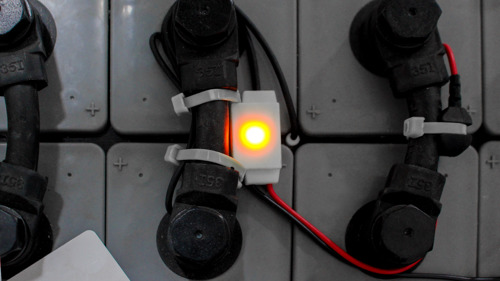
(Image above: SmartBlinky Temperature Monitor)
This allows operators to select a cooler battery or allow additional cooling time before returning the battery to service. Temperature alerts help organisations:
- Maximise battery cycle life
- Reduce premature battery failures
- Improve charging practices
- Achieve greater return on battery investment
Threat #3: Electrolyte Spills
The hidden cost of acid spills
Electrolyte spills may appear minor, but they can create major maintenance, safety and cost issues throughout a facility.
Battery electrolyte is corrosive and can damage:
- Battery trays
- Battery stands, roller beds and racking
- Flooring
- Material handling equipment
- Forklifts and vehicles
If a spill remains undetected, corrosion can spread and create more extensive repair requirements.
Why spills are often missed
Unfortunately, electrolyte spills frequently occur in areas that aren’t regularly inspected. Operators may not notice small leaks or overflow events until corrosion becomes visible. By then, damage may already have occurred.
A battery tray monitoring indicator detects the presence of electrolyte and immediately alerts users to a spill. Philadelphia Scientific’s SmartBlinky Tray Monitor uses a super-bright flashing indicator to provide immediate notification, helping ensure that spills are identified and cleaned quickly. The faster a spill is detected, the lower the risk of long-term asset damage.
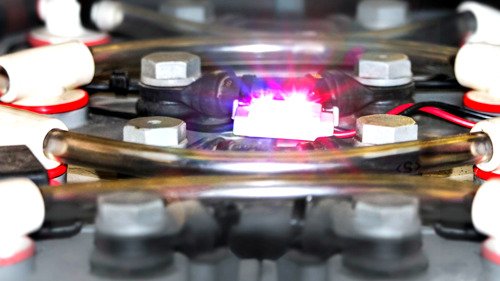
(Image above: SmartBlinky Tray Monitor)
Spill alerts help organisations:
- Protect infrastructure
- Reduce corrosion damage
- Improve workplace safety
- Lower maintenance and repair costs
Threat #4: Low Electrolyte Levels
One of the most common causes of battery damage
Low electrolyte is often overlooked because the battery may continue operating normally for some time after water levels begin to drop.
However, this does not mean the battery is safe.
Philadelphia Scientific identifies low electrolyte as one of the major battery performance risks facing industrial battery fleets. When electrolyte levels fall too low, battery plates can become exposed to air. This can result in sulfation and irreversible battery damage.
Why low electrolyte matters
Water is essential to proper battery operation. Without sufficient electrolyte:
- Internal components can become damaged
- Battery capacity can decline
- Performance can deteriorate
- Battery life can be shortened
Because these effects may develop gradually, the damage is often discovered long after the original cause occurred.
How watering monitors help
Battery watering monitors provide a simple visual indication of electrolyte condition.
Philadelphia Scientific’s SmartBlinky and SmartBlinky Pro battery watering monitors provide clear LED and even audio feedback showing when electrolyte levels are correct and when water is required. For organisations managing multiple batteries, this approach eliminates guesswork and helps maintenance personnel focus only on batteries that genuinely need attention.
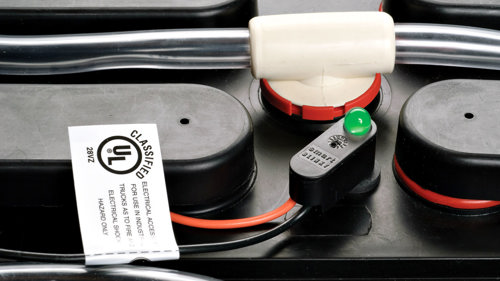
(Image above: SmartBlinky Battery Watering Monitor)
Monitoring electrolyte levels helps:
- Prevent plate exposure
- Reduce the risk of sulfation
- Support proper maintenance practices
- Extend battery service life
The Shift from Reactive to Proactive Battery Maintenance
Traditional battery maintenance often depends on scheduled inspections and operator experience. While these methods remain important, they are no longer enough on their own. Modern operations need timely information that enables action before damage occurs.
Battery alerts transform maintenance from a reactive process into a proactive one by providing immediate visibility into the conditions that most commonly shorten battery life:
- Low voltage
- High temperature
- Electrolyte spills
- Low electrolyte levels
When operators know about these issues as soon as they develop, they can respond appropriately and avoid the costly consequences of battery neglect.
Final Thoughts
Battery failures rarely happen without warning. The problem is that those warnings are often invisible unless the correct monitoring systems are in place.
Over-discharge, overheating, electrolyte spills and low electrolyte levels can all contribute to irreversible battery damage, reduced productivity and unnecessary replacement costs. By implementing battery alerts and monitoring solutions, organisations gain the visibility needed to address problems early and protect one of their most important operational assets.
In short, battery monitoring devices do more than notify operators; they help preserve battery life, improve reliability and maximise the return on every battery in the fleet.
